A month can look affordable until an annual insurance payment or equipment repair arrives. Recreation spending works better when irregular bills are visible before tickets, memberships or trips are booked. The aim is to preserve enjoyable activities without treating predictable bills as emergencies.
Give occasional costs a place in the calendar
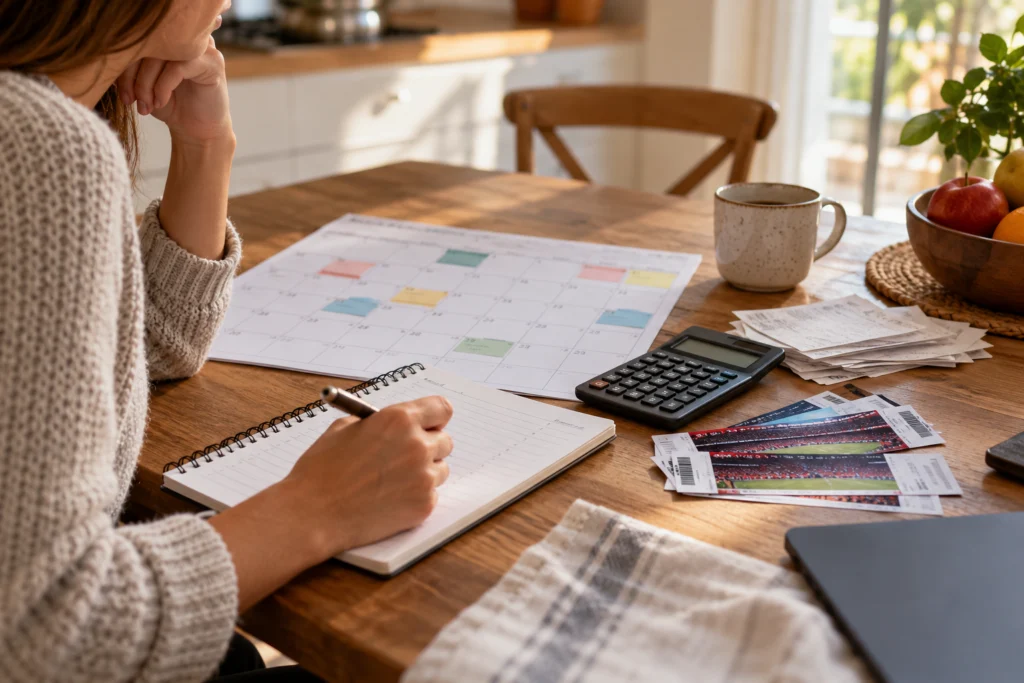
Review recent statements and list expenses that do not arrive monthly. Include annual memberships, seasonal transport needs and planned equipment replacement. Record the expected month and use a clearly labelled estimate where the amount is uncertain.
Divide a known annual target across the remaining saving periods if that helps your system, but keep the actual due date visible. A monthly average does not mean the money is available when a large payment is due next week.
| Category | Purpose | Planning question |
|---|---|---|
| Essential regular costs | Housing, food and other necessary commitments | What must be covered each pay period? |
| Irregular bill reserve | Predictable non-monthly expenses | When is the payment due? |
| Recreation allowance | Activities chosen within the remaining capacity | What can be spent without using the other categories? |
| Uncertainty buffer | A realistic allowance for changes | What happens if a cost is higher than expected? |
Choose priorities within recreation
List the activities you actually value rather than allocating equally to every possible hobby. A season pass used regularly and a rare major event may compete for the same funds. Decide the trade-off before an attractive sale appears.
Include transport, food, booking charges and equipment in the activity cost. A cheap entry fee may not be a cheap outing. Keep optional upgrades separate so they do not quietly become part of the minimum plan.
- List the next year’s known irregular bills.
- Compare the plan with actual spending after each month.
- Set aside money for dated commitments before optional purchases.
- Revisit the recreation allowance when income or necessary costs change.
Use a review that leads to a decision
If an activity repeatedly exceeds its allowance, decide whether to reduce its frequency, change the format or intentionally fund it from another optional category. Do not solve the mismatch by pretending the annual bills will be smaller.
The Financial Consumer Agency of Canada recommends tracking income and expenses and checking actual results against the budget. Use that process to refine your own priorities rather than copying an average household’s proportions as a rule.
Questions and answers
Should recreation always be the same amount each month?
No. A seasonal hobby or major event may need a different pattern. Keep the annual commitments and payment timing clear.
Is an annual bill an emergency?
A known renewal is usually a planning item, even if its exact price changes. Truly unexpected costs are a separate reason to maintain a buffer.
What if there is little room after essentials?
Choose lower-cost or less frequent options and review the overall budget. Do not assume borrowing for recreation will resolve an ongoing shortfall.
Sources: canada.ca.