
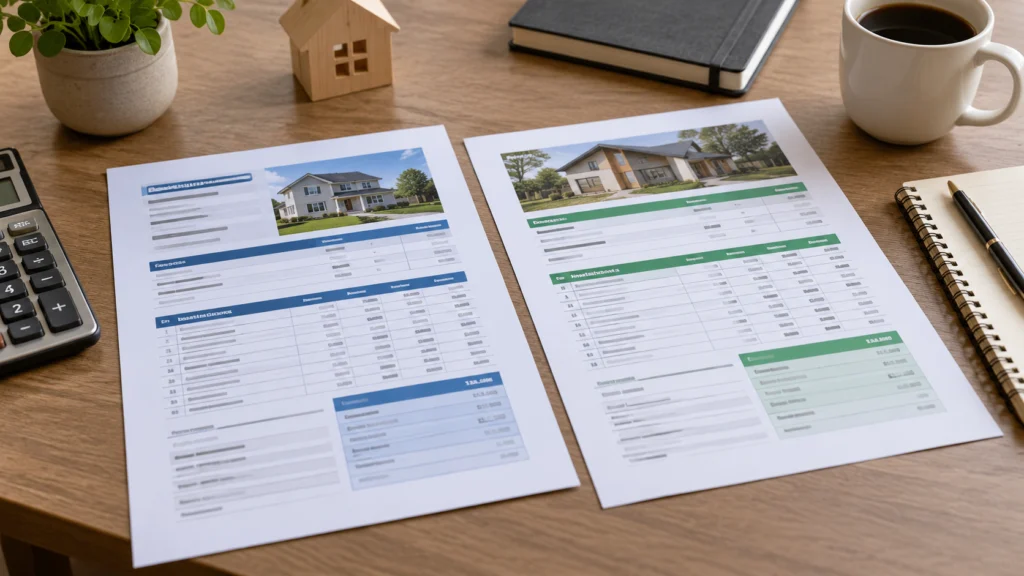
Two loans with the same advertised rate can lead to different costs. The amount advanced, fees and repayment schedule all matter. Begin with a consistent comparison sheet and the complete written terms rather than trying to decide from one headline percentage.
Use the same borrowing need
Compare offers for the same purpose and amount wherever possible. Record how much money reaches you, not only the face value of the loan. If fees are financed or deducted, ask how that changes both the useful amount and the repayment obligation.
Write down fixed or variable rate terms, payment frequency and the number of payments. A weekly figure cannot be compared directly with a monthly figure without converting the schedules carefully.
| Item | Record for each offer | Why it matters |
|---|---|---|
| Amount advanced | Money actually available after deductions | Defines what you receive |
| Payments | Amount, frequency and count | Shows timing and scheduled outflow |
| Fees | Required and optional charges separately | Prevents a rate-only comparison |
| Final obligation | Any balance due at the end | Reveals costs outside regular payments |
Calculate without hiding assumptions
For a simple fixed schedule, multiplying the payment by the number of payments helps show scheduled repayment. Add charges not already included, avoiding double counting. Variable rates, irregular schedules or final balances need a more careful calculation from the lender.
Keep an arithmetic example separate from an actual quote. For instance, 24 payments of $100 total $2,400 before any separately charged amounts. That calculation says nothing about current market pricing or whether the loan is suitable.
- Request written figures for the full term.
- Separate required fees from optional products.
- Ask about early repayment and missed-payment consequences.
- Compare the result with your actual cash-flow calendar.
Distinguish cheaper from affordable
A lower total cost may still involve payments that the household cannot manage. Conversely, a smaller payment spread over longer may increase total cost. Both the schedule and the overall amount need to fit the decision.
The Financial Consumer Agency of Canada advises considering interest, fees and term when comparing personal loans. If you cannot reconcile the numbers, ask the lender for an explanation and seek qualified independent assistance before signing.
Questions and answers
Is the lowest rate always the best offer?
No. Fees, amount advanced, term and conditions can change the comparison. Suitability and affordability also matter.
Can I compare by monthly payment alone?
No. The number of payments and any final balance are essential. A smaller payment can continue for much longer.
Should optional insurance be included?
Record it separately and clarify whether you want it and what it covers. Do not assume an optional product is necessary merely because it appears in a quote.
Sources: canada.ca.