
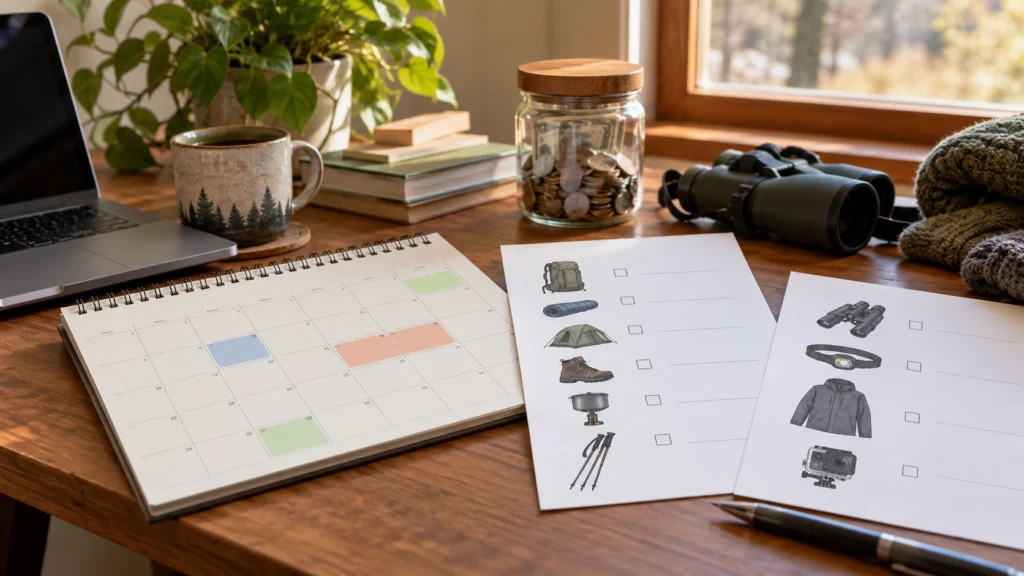
A seasonal hobby can create a concentrated burst of spending long before the first enjoyable day. Equipment, passes, travel and maintenance may arrive together. A dated savings target turns that cluster into a plan and reveals whether the proposed season fits the household budget.
Define the season you actually want
List the likely frequency, locations and equipment already available. Separate necessary costs from optional upgrades. A beginner’s season does not need to copy the spending pattern of someone who participates every weekend.
Include maintenance, fitting, storage and transport where relevant. Use current quotes for the specific activity and clearly label estimates. Do not invent a precise total from broad online averages that do not match your situation.
| Layer | What belongs here | Decision |
|---|---|---|
| Core participation | Access, entry or membership | What is essential for the planned season? |
| Equipment | Suitable items and maintenance | Buy, rent, repair or use what exists? |
| Travel and daily costs | Transport and practical extras | How often can outings fit? |
| Optional upgrade | Convenience or appearance | Can it wait without preventing participation? |
Match the saving rate to the deadline
Subtract money already set aside from the target, then divide the remainder across the saving periods before payment is due. For example, a hypothetical $600 gap over six contributions requires $100 each time. This is a planning example, not a suggested hobby budget.
If the contribution is unrealistic, change the scope or timing. Assuming a higher return or a future windfall can hide the mismatch. Near-term money needs a different approach from a long-term investment goal.
- Write the first payment date, not only the season start.
- Price the usable activity rather than just the headline pass.
- Keep optional upgrades separate.
- Review the target when quotes or household circumstances change.
Plan what happens after the season
Record what was actually used and what remains serviceable. That helps the next target reflect experience rather than repeated impulse buying. If a pass or item went unused, investigate the practical barrier before renewing.
A hobby should be enjoyable within the wider plan. Choosing fewer outings or a rental option can be a deliberate design choice rather than a failed attempt to fund the largest possible season.
Questions and answers
Should I save for every possible upgrade?
No. Start with the activity you realistically intend to do. Keep optional improvements visible and defer them if necessary.
What if the target cannot be reached by the deadline?
Reduce the scope, change the timing or consider another format. Do not assume borrowing or uncertain gains are the only options.
Can I use the same target next year?
Use it as a starting point, then update prices, equipment condition and participation plans. Last season’s total is evidence, not a permanent rule.
Sources: canada.ca.